


Reptile & Aquarium Lights in the Living Room: Safety, Glare & Sleep‑Friendly Setups
Reptile and aquarium lights can live safely in family spaces like living rooms and kids’ bedrooms—as long as you plan for heat, glare, wiring, and sleep. With a few layout tricks and the right hardware, you can protect children and pets while still giving your animals the light they need to stay healthy.
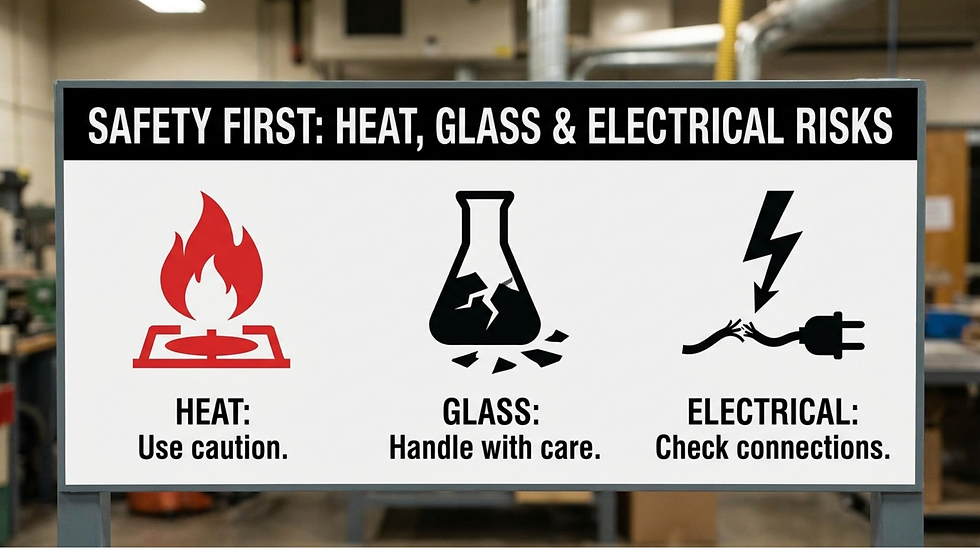
Safety First: Heat, Glass & Electrical Risks
High‑wattage basking lamps, metal halide reef lights, and even some LEDs can run hot enough to burn skin or melt plastic if they’re too close.
Key precautions:
Use ceramic‑socket fixtures for any incandescent, halogen, or mercury‑vapor bulb and keep them the minimum distance from flammables recommended by the manufacturer.
Add protective guards or mesh around basking lamps so children can’t touch hot bulbs or get directly under them.
For aquariums, always use UL/CE‑listed waterproof lights and proper drip loops so water cannot run down cables into outlets.
Put lights and power strips where toddlers can’t pull them down; wall‑mount strips under the cabinet or behind the stand.
A simple plug‑in RCD/GFCI adaptor is inexpensive insurance for any tank or vivarium plugged in near where your family relaxes.
Reducing Glare and Eye Strain in the Living Room
Strong LEDs or bare basking bulbs can throw distracting glare across a TV or couch.
How to reduce it:
Aim fixtures down into the tank or vivarium, not out into the room; shade the front of bulbs with deep‑dome reflectors.
Choose lights with diffuser lenses or frosted covers for aquariums so individual diodes don’t create sharp points of light.
Position the enclosure slightly off to the side of the main seating or TV, not directly opposite where you’ll be looking.
If your reef light has a strong “disco” shimmer, run it at a moderate height and intensity to soften the effect.
For reading nooks or home offices, consider fixtures that offer a “warm white” daytime mode you can dim in the evening so the tank glows without lighting up the whole room.
Sleep‑Friendly Schedules in Shared Spaces
Blue‑heavy light in the evening can delay melatonin and make it harder for people—and reptiles or fish—to sleep.
Practical rules:
In living rooms or bedrooms, schedule bright tank/vivarium lights to turn off at least 1–2 hours before human bedtime.
Avoid running white or blue “moonlights” all night; most reptiles and fish benefit from true darkness.
Use timers or smart plugs so the schedule is automatic and consistent.
If you enjoy a little evening ambience, run a dim, warm‑white accent light on the stand or wall instead of keeping the tank lights blasting.
EMF Concerns: What We Know
Modern LED drivers, fluorescent ballasts, and pumps all emit some electromagnetic fields, but they are typically well below consumer safety limits at normal viewing distances.
Good practice:
Keep power bricks and ballasts outside the vivarium or stand with adequate ventilation.
Avoid stacking multiple high‑wattage ballasts directly against the side of a child’s bed or chair; mount them on the back of the stand instead.
Choose reputable, safety‑certified equipment rather than unbranded imports with no test data.
For most families, proper mounting and distance are enough; EMF from aquarium or reptile lights is usually far lower than from Wi‑Fi routers or phones.
Child‑Proofing Your Setups
Curious hands and tails are the real hazard in family rooms.
Simple child‑safety upgrades:
Use stands and cabinets that fully enclose cables, with only a single power cord exiting to an outlet.
Install locking doors or child‑proof latches on vivarium doors and aquarium cabinets so kids can’t open them unsupervised.
For floor‑level enclosures, consider perspex or glass doors instead of screen fronts, to prevent tiny fingers from poking animals or touching hot mesh.
Route cables through cable channels or trunking along the wall to stop tripping or tugging.
Teach children that lights and heaters are “look, don’t touch” equipment, just like an oven.
Room‑Friendly Lighting Layouts
A few layout patterns work especially well in family spaces:
Corner placement: Put the tank or vivarium in a corner so most light spills toward the walls rather than into seating.
Eye‑level tanks, higher lights: For aquariums, hang LEDs slightly forward over the water so people sitting down can’t see the diodes directly.
Top‑mounted reptile fixtures: Mount UVB and basking lights on a canopy or mesh lid rather than inside the enclosure when it’s at child height; this protects bulbs and keeps heat away from fingers.
If you have multiple tanks in one room, synchronise their schedules so bright lights are all on and off together instead of having harsh light from one corner at midnight.
Example: Living‑Room Bearded Dragon Setup
120–150 cm vivarium on a cabinet, placed against a side wall.
T5 HO UVB tube and LED bar mounted inside the hood, with a halogen basking lamp in a deep dome, all pointing down.[cttlight]
Outlet strip mounted high on the back of the cabinet; one heavy‑duty cable to the wall, with an RCD adaptor.
Timers: lights 07:30–19:30, no night lights; room lamps handle evening ambience.
Optional child‑lock on sliding glass doors.
This gives the dragon strong UVB and heat, while the family sees a bright daytime window that goes dark in the evening like the rest of the room.
Example: Reef Tank in the Lounge
Tank on a sturdy stand, set slightly off‑centre from the TV wall.
LED reef fixture hung 20–30 cm above water with wide‑angle lenses and diffusers to reduce hotspots.
Controller schedule:
Blues/whites ramp 10:00–11:00, peak 11:00–19:00, ramp down 19:00–21:00, OFF overnight.
Cabinet doors close fully; cables bundled and fixed along the back.
The result: daytime shimmer that makes the room feel alive, followed by a dark, sleep‑friendly lounge after 9 pm.


